
Research -- StepUp to Learn

Learning to Read Today: Emojis, Photos, and More

Learning to Read Today: Emojis, Photos, and More

Technology dominates every aspect of our lives: how we work, how we live and how we communicate. A recent study in the Journal of Early Childhood Research examines our communication and looks at how it is affecting children learning to read.

8 Foods to Increase Your Child's Creativity

8 Foods to Increase Your Child's Creativity

Steve Jobs, co-founder of Apple, swore by a fruit heavy diet and sometimes dabbled in fruitarianism (a diet consisting of fruits, vegetables, nuts and seeds). Jobs often referred to his fruit-heavy diet as laying the foundation for his creativity and success.

When Curiosity Peaks...

When Curiosity Peaks...

Curiosity may kill the cat; but when it comes to learning, it stimulates the brain and enhances learning. Researchers reveal what happens in our brains when our curiosity is peaked and why this leads to better learning.

Kindergarteners and iPads: Sharing is Key

Kindergarteners and iPads: Sharing is Key

To give children iPads in school, or not – that is the question. The ‘correct’ answer to this question still remains a bit of a mystery. The use of iPads in the classroom has caused a political uproar in some school districts.

How Your Child's Weight Affects School Readiness

How Your Child's Weight Affects School Readiness

recent study in Early Childhood Research Quarterly ventures into largely unchartered research territory. While previous research has examined how extra weight may inhibit children’s ability to perform optimally, most studies haven't differentiated between weight classes, such as overweight and obese. Further, there are few studies which examine the performance of underweight students in wealthy countries.

Early Literacy: How Parent Involvement Has Evolved
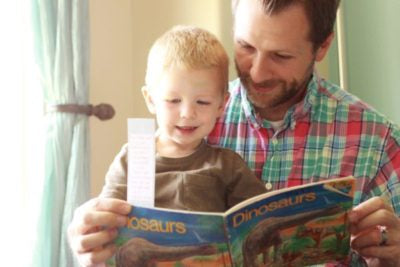
Early Literacy: How Parent Involvement Has Evolved

recent study published in the Journal of Early Childhood Literacy, investigates how families have supported their children’s early literacy and how this support has evolved over the past century.

Distracted Now, Pay Later

Distracted Now, Pay Later

Children experience many phases and changes during their school years, and its tempting to think they will grow out of most of their difficult phases. But a new study shows that children with early attention problems are at risk for worse academic outcomes in high school.

Learning Styles: Were Teachers Misled?

Learning Styles: Were Teachers Misled?

It’s been commonly accepted that each individual student has a favored learning style: visual (spatial), aural (auditory), verbal (linguistic), and physical (kinesthetic). Educators profess that by hitting each learning style in a lesson, success for all students is nearly guaranteed. And teachers have been directed to make sure that their instruction addresses each. Have we been misled? 


5 Brain Myths That Harm Our Children

5 Brain Myths That Harm Our Children

Are you left-brained or right-brained focused? Do we really only use 10 percent of our brain?

Many of us have pondered over these questions at one time or another, and some of us may even believe we have a definite answer to one or more of these kinds of brain teasers. However, a scientific study informs us that there is no validity to these questions as they are actually neuromyths, or unscientific ideas about the brain.

Teacher-Student Relationships: Students Hold The Key

Teacher-Student Relationships: Students Hold The Key

Teachers make all the difference in education. We aren’t just talking about academics, but also in how they impact students’ lives. Given the power of teacher-student relationships, education research can’t ignore the intricacies of this group's dynamics.


Preschool Interventions: How Accurate Is The Research?

Preschool Interventions: How Accurate Is The Research?

Early childhood educators are grateful for the work that researchers do to increase our understanding of the field of preschool education and how improve it. However, no one study alone can solidify advances –- research-based progress comes from the sum of findings as a whole, not just the parts. 

Playing to Raise Happy, Healthy Children

Playing to Raise Happy, Healthy Children

Long gone are the days of playing dress-up, tag, and action figures. Becoming a parent often means losing the ability to play! Yet whimsical free play is crucial to children’s development, according to Nancy O’Conner, the director of the Family Center at Kansas State University. O'Conner, a licensed clinical marriage and family therapist, suggests that in order to raise happy, healthy children, parents may want to relearn how to be a kid again.