Research -- StepUp to Learn
Can Children Map Read at the Age of Four?
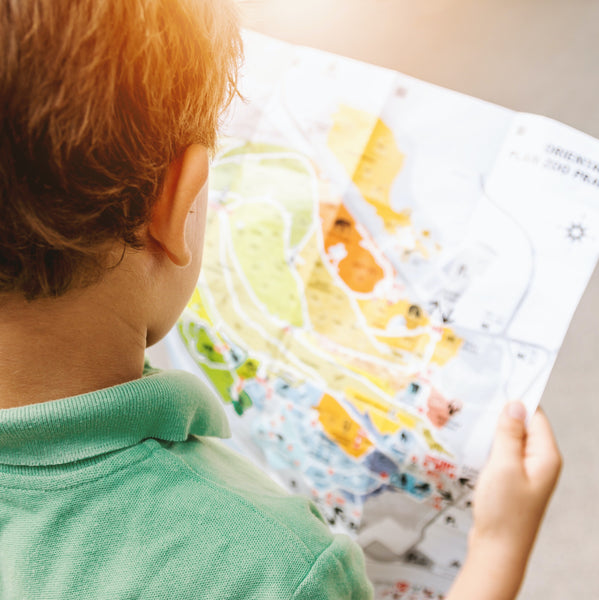
Children start to develop the basic skills that underlie map reading from the age of four – according to new research from the University of East Anglia.
These Movement Exercises Predicted Young Kids' School Performance
Young children who performed well on these tasks were more likely to achieve higher scores for reading, writing and math.
How to Train Your Brain to Ignore Distractions
While strong distractions may automatically capture our attention, the trained brain can rapidly suppress such distractions to help us efficiently reach our goals.
Solving a Tough Problem? Kids Use the Same Brain Network as Adults
When kids face tough problems -- like math -- they rely on the same brain network as adults.
Robot Helps Students with Learning Disabilities Stay Focused
Engineering researchers are successfully using a robot to help keep children with learning disabilities focused on their work.
The Future of Learning Includes All of Our Senses
Neuroscientists reveal how the brain is optimized for learning with all the senses and with movement in a wide variety of domains, such as letter and vocabulary acquisition, reading, mathematics, music, and spatial orientation.
Not All Preschool Math Games Are Equal
Researchers explore whether number line games based on the concept of the mental number line can improve children’s number knowledge and basic arithmetic skills.
The Way We Learn From Mistakes Can Lead to Anxiety
Student expectations of exam grades reveal which individuals have an optimistic or pessimistic outlook, and why that matters.
How Your Mood Affects the Way You Process Language
When participants were in a negative mood, they showed a certain type of brain activity that leads researchers to think we should pay more attention to our mood when we do some tasks.
Talk With Your Hands? You Might Think With Them Too!
When we learn, we use movement practice to embed movement patterns into our muscle memory.
Forgetting is Natural, But These Two Techniques Can Slow it Down
Researchers find that using two well-known techniques together offer drastic changes in learning effectiveness.
What Your Gaze Reveals: Attention, Processing and More
Eye movements during tasks provide information about what the person is currently occupied with and what goals are being pursued within the task.